How Reykjavik Excursions Achieved 127% Growth While Competitors Stagnated
1. INSIGHT
Data-Driven Discovery of Untapped Potential
As local tourism recovered from COVID, Datera conducted a comprehensive audit of Reykjavik Excursions' website and digital assets to develop a new SEO strategy. Our analysis examined three key areas: traffic sources, landing page performance, and conversion paths to sales.
A critical finding emerged: despite having numerous articles, the blog section was significantly underperforming in both traffic generation and sales conversion.
Key findings from our initial assessment:
- The company's SEO footprint was significantly smaller than major players in Icelandic tourism, indicating substantial room for growth in search visibility
- Existing blog content lacked the depth needed for strong search performance, with most articles providing only surface-level information
- High-traffic articles weren't effectively connected to relevant products, missing valuable conversion opportunities
- Content creation lacked strategic keyword targeting and SEO optimisation
- Article structure didn't align with customer journey stages, limiting their effectiveness at different points in the marketing funnel
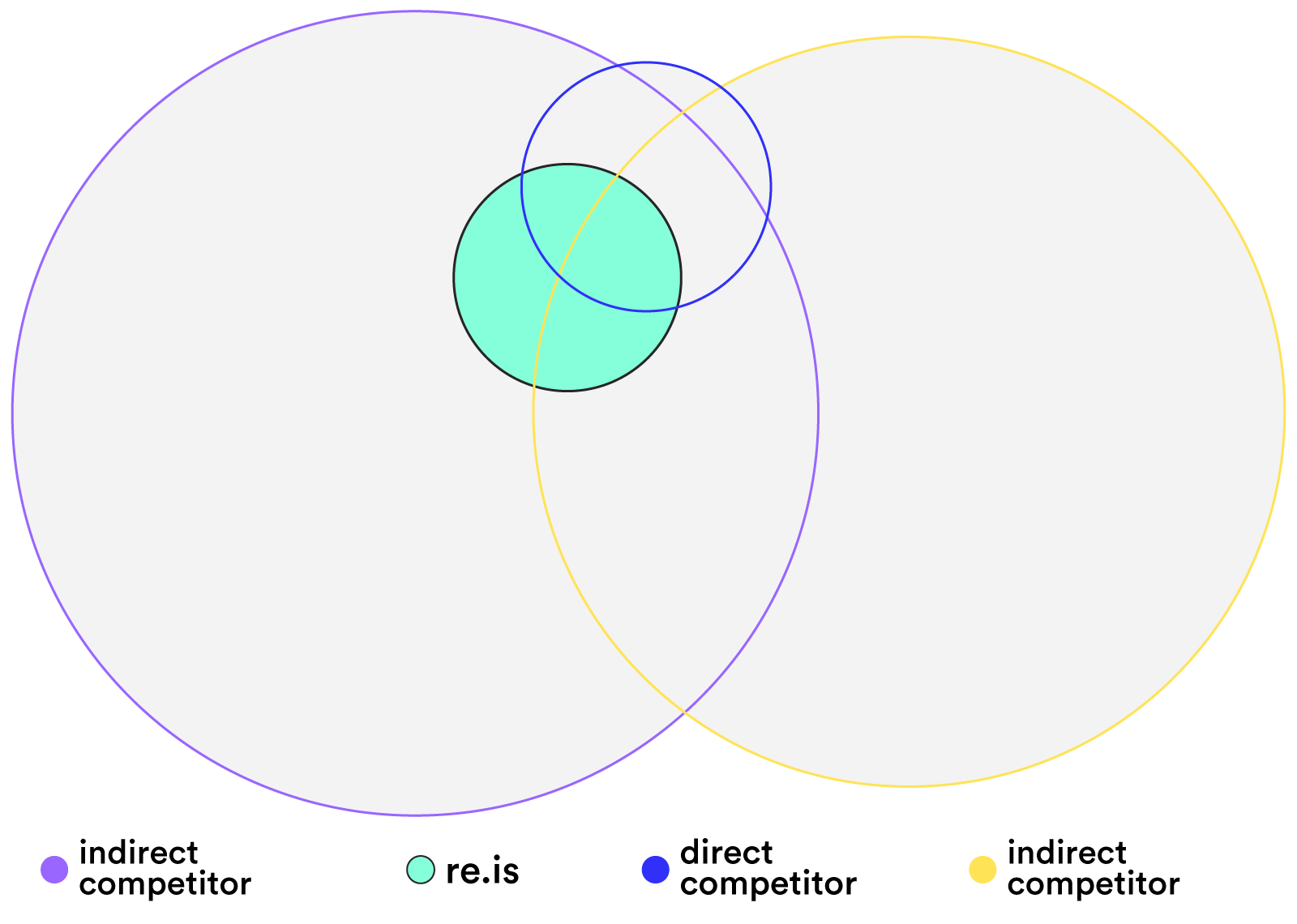
SEO footprint comparison between Reykjavik Excursions (green) and competitors, end of 2021.
Circle size represents keyword volume indexed by Google in US, with overlapping sections showing shared keywords.
2. APPROACH
Strategic Content Architecture
Competition for search visibility in Iceland's tourism sector is intense, with many companies trying for the top positions. To stand out, we needed a detailed strategy that considered every aspect of search performance, with clear data tracking at each step.
Defined Metrics for Success
We established clear, measurable objectives:
- Growth in SEO footprint
- Improved rankings for high-value keywords
- Increased organic traffic to blog content
- Higher blog visit-to-sale conversion rates
Strategic Content Framework
We implemented the Pillar-Cluster model to organize all content creation and updates. This approach builds authority through comprehensive pillar pages covering major themes, supported by detailed cluster articles addressing specific subtopics.
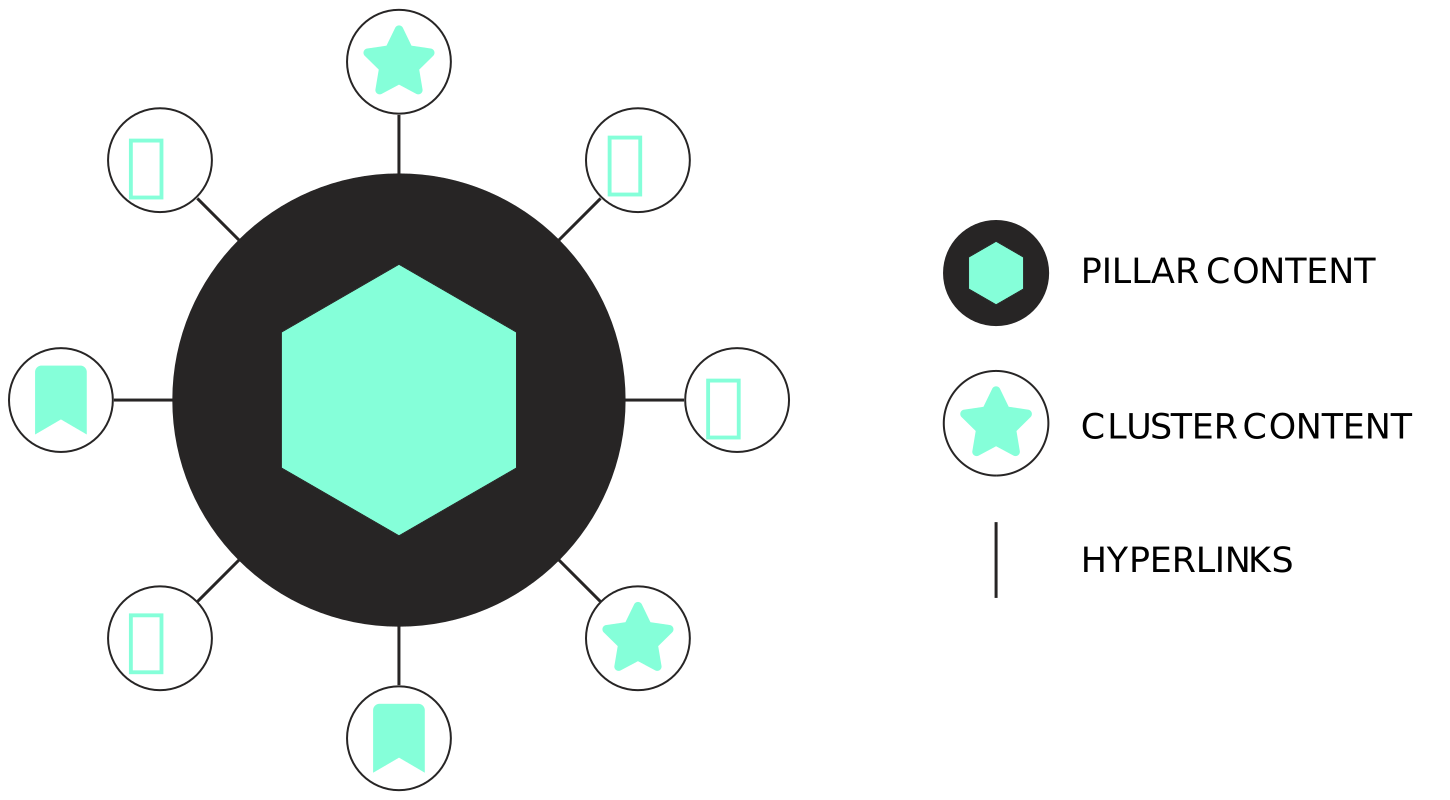
The Pillar-Cluster model organises content hierarchically
Pillar pages provide broad topic coverage, while cluster articles deliver in-depth analysis of specific aspects
Example Structure:
Pillar: Sky Lagoon (main category page)
Cluster: Related blog posts exploring specific aspects of the Sky Lagoon offering
Data-Informed Content Development
Our keyword research categorized search queries by user intent, allowing us to map content to specific stages of the customer journey:
- „northern lights in iceland“
Broad informational query → Upper-funnel educational content - „iceland northern lights forecast“
Mixed intent query → Mid-funnel content combining tour options with forecast data - „iceland northern lights tours“
Commercial intent → Direct product category page
This analysis revealed content gaps in Reykjavik Excursions' digital presence. We developed a long-term content strategy using the Pillar-Cluster model to address these opportunities.
Each new or updated piece of content followed detailed briefs based on keyword analysis. Existing articles were expanded with deeper insights, strategic internal linking, and relevant product connections.
Technical Foundation
Beyond content improvements, we maintained ongoing technical SEO optimization, focusing on site speed, structure, and other critical ranking factors.
3. RESULTS
Exceptional Growth Across Key Metrics
Over 2.5 years, starting in early 2022, our strategy delivered outstanding results while competitors remained flat or declined. Including 127% expansion in SEO footprint, 24x increase in blog traffic compared to pre-COVID peak and 143% higher conversion rate from blog visits to sales.

Increase in SEO Footprint
While organic traffic to blog grew 24x
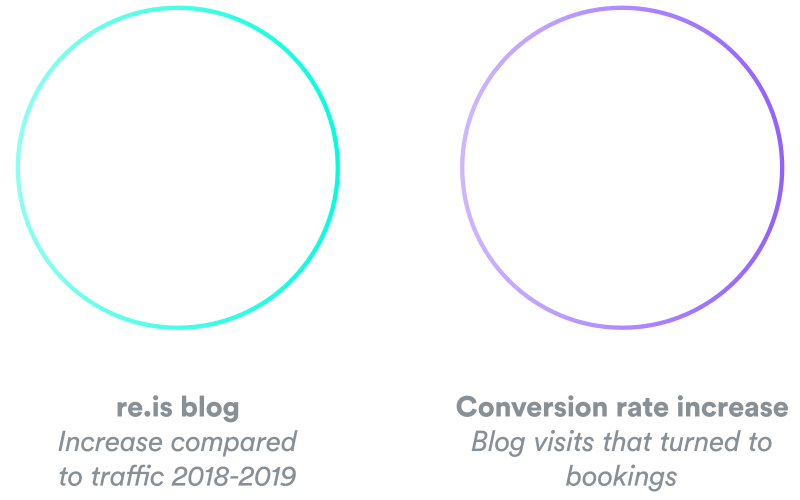
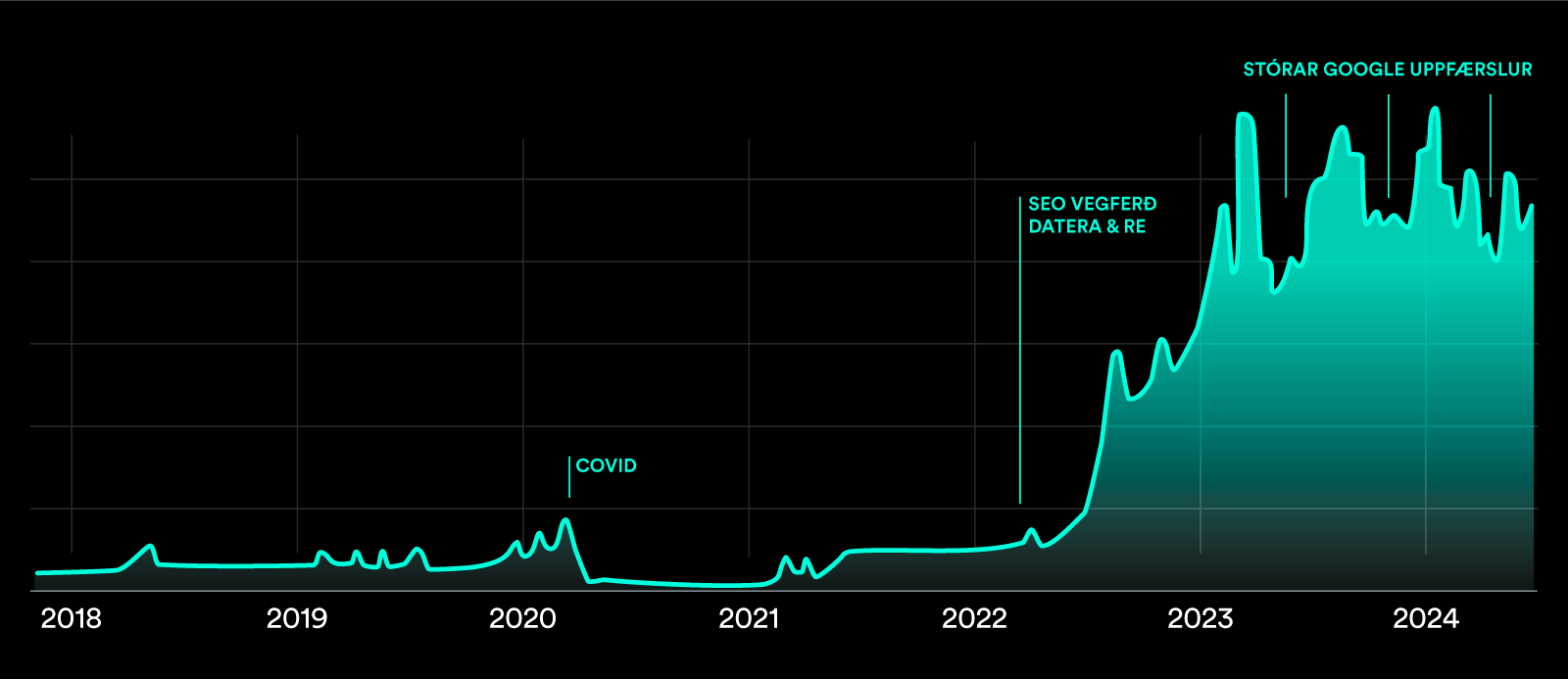
Að ofan má sjá gríðarlega fjölgun heimsókna á blogg re.is
Dæmi um þau miklu áhrif sem góð SEO strategía getur haft
- Our content strategy extended beyond SEO, with articles gaining significant traction across Reykjavik Excursions' social media channels, amplifying reach and engagement.
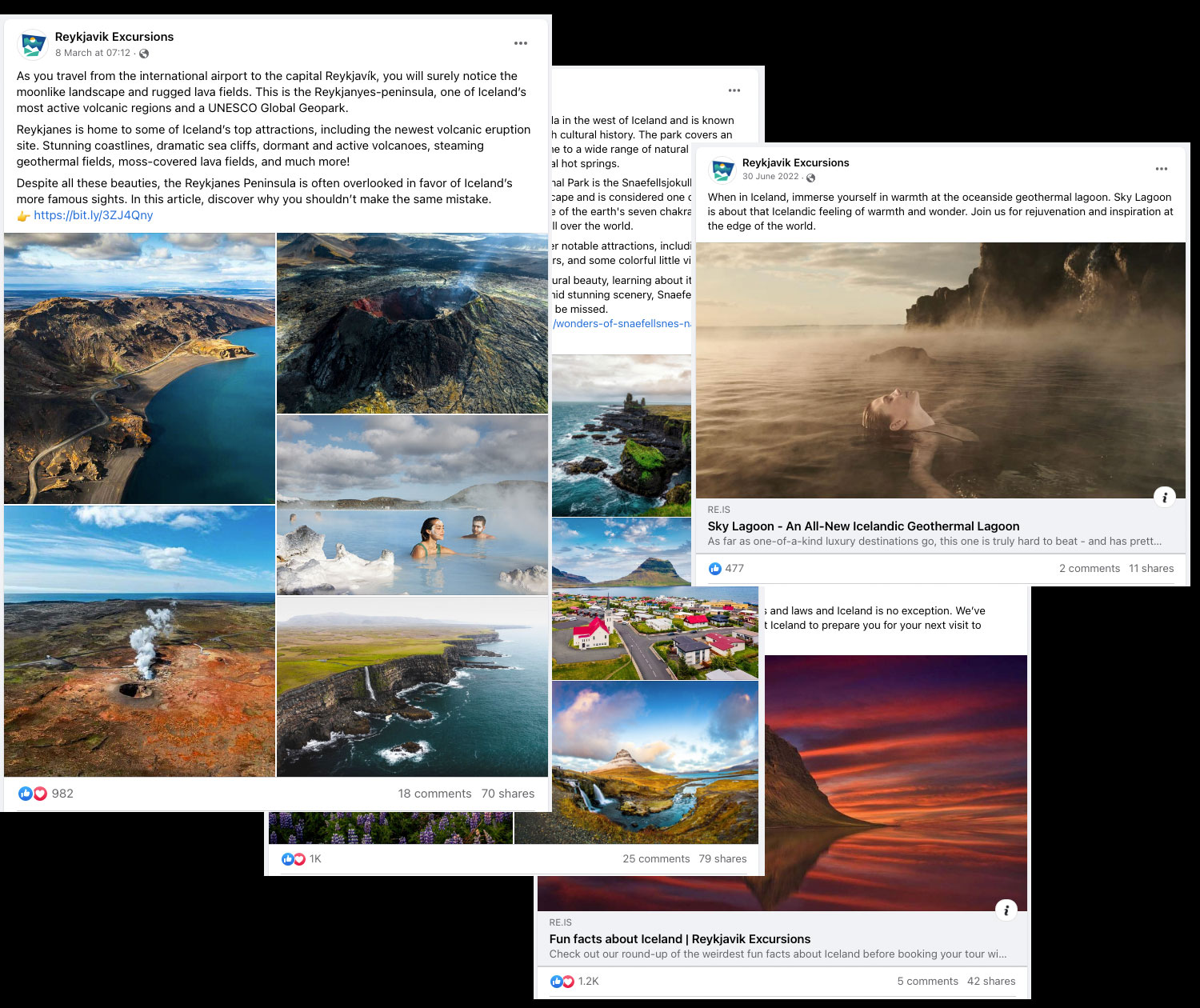
Above are a few examples of blog content being shared on social media
Good SEO strategy should always leverage social platforms
Key Success Factors
This transformation required several critical elements working in concert:
- Strategic Partnership:
Close collaboration between Datera's technical expertise and Reykjavik Excursions' marketing team created the foundation for success - Data-Driven Decision Making:
Comprehensive analysis of the travel sector, keyword opportunities, and content performance guided every step - Leadership Support:
Strong backing from Reykjavik Excursions' management enabled long-term strategic focus - Systematic Implementation:
Bridging analysis and content production through detailed briefs and consistent methodology - Adaptability:
Regular adjustments to strategy based on algorithm updates and performance data
Conclusion: Building Sustainable Growth
Reykjavik Excursions' digital transformation showcases what's possible when a company commits to a long-term vision for digital growth. Their 127% SEO footprint expansion and 24x increase in blog traffic reflect more than just numbers – they represent a fundamental shift in how the company approaches digital marketing.
The success of this project demonstrates that even in Iceland's competitive tourism market, strategic thinking and commitment to data-driven decisions can create lasting results. Reykjavik Excursions' willingness to invest in their digital future while maintaining flexibility as market conditions changed was crucial to their success.